


There’s a common idea bordering on cliche that previous generations were somehow tougher and grittier than more recent ones. Part of it has a basis in history; anyone with parents or grandparents who survived the Great Depression and World War II is more likely to look askance at younger adults with emotional support parrots. Part of it can be attributed to the age-old tendency to view the past in more positive terms.
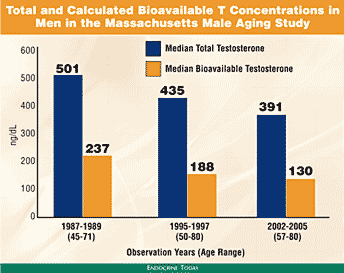
The most important element, however, is scientific: Studies have shown that average testosterone levels in men have decreased by roughly 1% year-over-year since at least the 1980s.
The implications of this are astonishing. In short, one of the fundamental hormones present in both men and women are in free-fall, and we’ve yet to truly understand the impact.
Why Have Testosterone Levels Dropped in Men?
While the decrease in testosterone is clear, the causes are more ambiguous. Some researchers point to a decrease in physical activity and an increase in more sedentary lifestyles. Others point to environmental toxins that disrupt hormonal systems in men and women alike. There’s even one theory that posits a decrease in smoking, as regular nicotine usage can provide a slight boost to testosterone (note: the negatives of smoking vastly outweigh the testosterone boost). At the end of the day, we may not know the exact cause, but the fact of the matter is that the average male today likely has significantly lower testosterone levels than the average male 30 years ago.
What Does Low Teststerone Mean for Men?
The effects of low testosterone are well-studied and documented. Lower testosterone levels can mean higher body fat, lower muscle tone, brain fog, fatigue, lower bone density, irritability, depression, lack of motivation, poor sleep, and diminished libido. All of these combined represent a major negative impact on quality of life for men.
Fortunately, testosterone replacement therapy (TRT) under the guidance of a qualified andrologist, can help mitigate, if not reverse, these effects. Unfortunately, there’s a lack of awareness and widespread misunderstanding about what TRT is, and what it can do.
Setting The Record Straight About TRT
- It doesn’t mean you’re taking steroids: One of the primary misunderstandings about TRT is that it’s a steroid. TRT either uses low levels of bioidentical hormones or gives a boost to the body’s testosterone production with the goal of addressing deficient levels of testosterone. Anabolic steroids are illegal performance enhancement drugs that are usually taken without any medical oversight and often result in organ damage, infertility, shrunken testicles, and “roid rage.”
- It’s meant to restore performance rather than enhance it: The internet is flooded with supplements, peptides, and other products that claim to boost physical performance. While this is well and good for athletes and others seeking to hit new heights of fitness, it’s not the same as the goals for TRT.
TRT is meant to be restorative, with the aim of bringing testosterone levels back up to where they should be for an average, healthy man. It’s not a super-soldier serum; it’s a medical treatment. - It’s not about vanity, it’s about quality of life: There’s a multi-billion dollar industry in delaying, if not reversing, the process of aging from an aesthetic standpoint. Botox can remove wrinkles, hair treatments can address balding and gray hair, etc. All of these treatments address the appearance of aging. Testosterone replacement therapy is different in that it helps maintain a baseline level of physical fitness and mental acuity that can help improve day-to-day life and keep an active and engaged lifestyle within reach for men of all ages.
We may never truly know the reason for declining testosterone in men, but we do know that it can be treated in a safe, medically tested manner. If you’re wondering if you or someone you know has low testosterone, contact us at Perito Urology today.